

The History of Cartography

A New and Correct Map of the World Projected. . . , Charles Price (London, 1714)

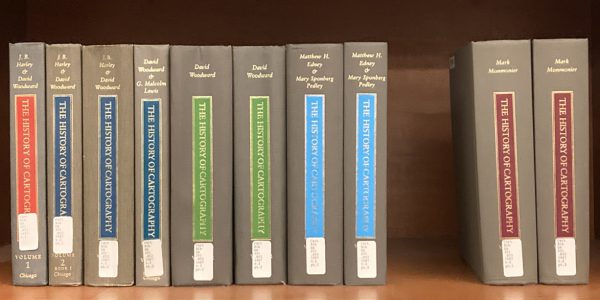
Volume 1: Cartography in Prehistoric, Ancient, and Medieval Europe and the Mediterranean (1987)

Volume 2, Book 1: Cartography in the Traditional Islamic and South Asian Societies (1992)

Volume 2, Book 2: Cartography in the Traditional East and Southeast Asian Societies (1995)

Volume 2, Book 3: Cartography in the Traditional African, American, Arctic, Australian, and Pacific Societies (1998)

Volume 3: Cartography in the European Renaissance (2007)

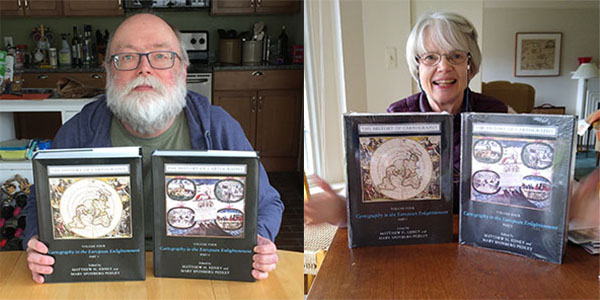
Volume 4: Cartography in the European Enlightenment

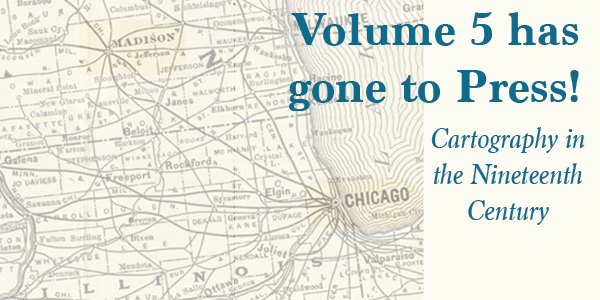
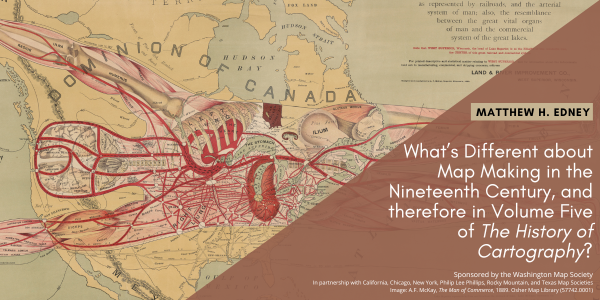
Volume 5: Cartography in the Nineteenth Century

Volume 6: Cartography in the Twentieth Century


A New and Correct Map of the World Projected upon the Plane of the Horizon Laid Down from the Newest Discoveries and Most Exact Observations.

Hand-colored copper engraving by Charles Price (London, 1714). Courtesy of the Osher Map Library, University of Southern Maine.

Link to 492 K image


About the Project
About David Woodward

How to Order Books

Financial Support:
Donate On-Line or by Mail
News and Newsletter archive
(updated 14 October 2008)
Broadsheet Series:
Literary Selections on Cartography

(updated 27 March 2008)
Exploratory Essays Initiative
for Volume Six
Cartographic Resources
 Windows on the World Exhibit

Employment Opportunities:
Fellowship Announcement
(Applications next solicited in July 2009)

Contact Us
Site Information
and Copyright Notice


About The Project


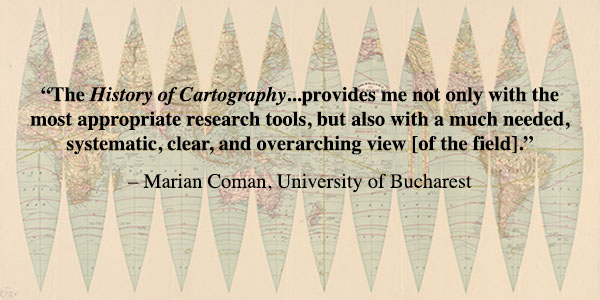
The History of Cartography Project is a research, editorial, and publishing venture drawing international attention to the history of maps and mapping. The Project's major work is the multi-volume History of Cartography series. Its inter-disciplinary approach brings together scholars in the arts, sciences, and humanities. By considering previously ignored aspects of cartographic history, the Project encourages a broader view of maps that has significantly influenced other fields of study.

Organized by region and time period, The History of Cartography looks at maps in the context of the societies that made and used them. The volumes integrate existing scholarship with new research, examining an unprecedented range of artifacts from local maps to those of the cosmos. The books are extensively illustrated and contain detailed footnotes, appendixes, and reference maps. The award winning series, founded by J. B. Harley and David Woodward, is now edited by a team of scholars and published by the University of Chicago Press.

For information about current Project activities, read our most recently-published newsletter at our archive of Project newsletters.


Back to Home Page Directory


David Woodward

29 August 1942 - 25 August 2004


David Woodward, cofounder of the award-winning History of Cartography series and Arthur H. Robinson Professor of Geography Emeritus at the University of Wisconsin–Madison (UW), died of cancer on 25 August 2004, at his home in Madison. His passing was peaceful, and he was surrounded by his family.

David Woodward was born in 1942 in Royal Leamington Spa, England. After receiving a bachelor’s degree from the University of Wales, Swansea, he came to the United States to study cartography under Arthur H. Robinson at UW–Madison, where he earned a doctorate in geography in 1970. David spent the next eleven years at the Newberry Library in Chicago as cartographic specialist, curator of maps, and, from 1974 to 1980, director of its Hermon Dunlap Smith Center for the History of Cartography. In 1980 David joined the faculty of UW–Madison’s Geography Department and was named Arthur H. Robinson Professor of Geography in 1995. He retired from teaching in August 2002 to dedicate more of his time to research, editing, and outreach.

During a 1977 walk through the countryside in Exeter, England, David Woodward and J. Brian Harley (UW–Milwaukee) developed the idea for what became The History of Cartography. They envisioned an ambitious multi-volume reference work that would examine the social production and consumption of maps across cultures from prehistoric origins to the twentieth century. When Harley died unexpectedly in 1991, David continued the Project, knowing that his friend and colleague’s influence would always be felt.

David skillfully balanced his work on the History of Cartography Project with his other scholarly endeavors and academic responsibilities. In addition to the many awards garnered by the published volumes of The History of Cartography (follow links at www.geography.wisc.edu/histcart/series.html for more information about each individual volume), David’s international reputation was acknowledged closer to home. He was honored to receive a five-year senior membership at the UW Institute for Research in the Humanities, the UW–Madison Hilldale award in the arts and humanities, and the College of Letters and Sciences Career Service Award, among many other distinctions. He gave hundreds of public lectures, discussing and developing new ideas with others as well as disseminating his research.

David was a prolific and well-regarded scholar; his individual research and editorial works were widely disseminated and highly acclaimed. Among David’s numerous publications are: The All-American Map: Wax-Engraving and Its Influence on Cartography (Chicago: University of Chicago Press, 1977); Catalogue of Watermarks in Italian Maps, ca. 1540-1600 (Florence: Leo S. Olschki, 1996); Maps as Prints in the Italian Renaissance: Makers, Distributors & Consumers (The 1995 Panizzi Lectures) (London: British Library, 1996); Cultural Map of Wisconsin: A Cartographic Portrait of the State (Madison: University of Wisconsin Press, 1996), with Robert C. Ostergren, Onno Brouwer, Steven Hoelscher, and Joshua G. Hane; and Approaches and Challenges in a Worldwide History of Cartography (Barcelona: Institut Cartogràfic de Catalunya, 2001), with Catherine Delano Smith and Cordell Yee.

In spite of his many accomplishments, David was an unassuming man. As one friend simply wrote: “he was by far one of the nicest and most genuine people I have ever met. He had a great presence—and a great laugh. He will be missed dearly.”


Link to PDF New York Times obituary

Link to Wikipedia entry on David Woodward

Link to a translation of Roger Bacon's Opus Maius (ca. 1268), which was made as an aid in writing "Roger Bacon on Geography and Cartography," by David Woodward and Herbert M. Howe in Roger Bacon and the Sciences: Commemorative Essays, ed. Jeremiah Hackett (Leiden: E. J. Brill, 1997), 199-222. It is posted here for the convenience of researchers.

Back to Home Page Directory


Windows on the World exhibit poster

"Windows on the World: A Selection of Historical Maps"

"Windows on the World" was an exhibit at the University of Wisconsin Department of Special Collections that was launched on the occasion of the 24th annual Institute for Research in the Humanities Burdick-Vary symposium on Cartography in the European Renaissance (6-8 April 2000). The symposium was intended as a forum for issues arising out of the research for Volume Three of the History of Cartography Project. "Windows on the World" reveals to the general public and university community some of the many historical map resources currently available in University of Wisconsin library collections. These cartographic treasures are often overlooked, embedded as they are in a huge library system that must respond to dozens of demanding undergraduate and graduate programs. We hope that this exhibit reminds not only scholars in the history of cartography and the historical geography of the Midwest but the general public as well of these rich primary collections.

Windows on the World Virtual Exhibit


Back to Home Page Directory


Ordering Information

Dust jackets: History of Cartography Volumes One and Two (Books One, Two, and Three)
History of Cartography Volume One
and Volume Two, Books 1, 2, and 3

Dust jacket: History of Cartography Volume Three, Part One Dust jacket: History of Cartography Volume Three, Part Two
History of Cartography Volume Three (Parts 1 and 2)
Volume Three published July 2007
 

The History of Cartography

To order books, please contact:
The University of Chicago Press
11030 South Langley Avenue
Chicago, Illinois 60628 USA

Toll free telephone in US and Canada: 1-800-621-2736
Telephone (rest of world): 773-702-7000

Toll free fax in US and Canada: 1-800-621-8476
Fax (rest of world): 773-702-7212

Email: custserv@press.uchicago.edu

Order The History of Cartography titles on University of Chicago Press Web Server
URL: (http://www.press.uchicago.edu/Complete/Series/HOC.html)
 

Back to Home Page Directory


Financial Support for the Project


Support Excellence! Click here to donate using our secure on-line server.
http://www.uwfoundation.wisc.edu/giving?seq=1305


The National Endowment for the Humanities and the National Science Foundation provide major funding for the History of Cartography Project. This funding and the long-term viability of the Project depend on additional support from individuals, foundations, and corporations.

Please consider supporting the History of Cartography Project. Gifts are tax deductible and may be matched by the National Endowment for the Humanities. Donors are acknowledged on the financial support page of the books and in our winter newsletter. As a token of our thanks, supporters also receive a limited edition, hand-printed broadsheet featuring a literary passage about cartography.


Categories of Giving

Associates:    $150,000 and above, cumulative
Sponsors:    $15,000 - $149,999, cumulative
Founders:    $5,000 - $14,999, cumulative
Benefactors:
   $1,000 - $4,999
Patrons:    $250 - $999
Friends:    $100 - $249

Other Gifts Welcome


To contribute by mail:
  Make checks payable to the


  University of Wisconsin Foundation
      for deposit in account number 1241429.
       
 
Mail to:
  The History of Cartography Project (1241429)
    c/o University of Wisconsin Foundation
    U.S. Bank Lockbox
    P.O. Box 78807
    Milwaukee, WI 53278-0807
    USA


The University of Wisconsin Foundation is
a non-profit 501 (c) (3) organization.


Credit card contributions welcome on-line:


http://www.uwfoundation.wisc.edu/giving?seq=1305


For assistance with gift processing,


email Chris.Glueck@uwfoundation.wisc.edu or call 608-265-9952.
                               

To contact a History of Cartography Project
staff member directly regarding a donation:
Email: hcart@geography.wisc.edu
Telephone: 608-263-3992
Fax: 608-263-0762

Please also contact us to discuss how planned giving can benefit the History of Cartography Project.

Back to Home Page Directory


Cartographic Resources on the Net


Back to Home Page Directory


 Contact Us

Mailing address:
The History of Cartography Project
Department of Geography
University of Wisconsin
470 Science Hall
550 North Park Street
Madison, WI 53706-1404 USA


General phone: 608-263-3992
General fax: 608-263-0762
General email:
 hcart@geography.wisc.edu
Administrative email:
 hcart-admin@geography.wisc.edu
Illustrations email:
 hcart-illustrations@geography.wisc.edu

Matthew H. Edney, Project Director
Telephone: 608-263-3992
Email: edney@wisc.edu

Jude Leimer, Managing Editor
Telephone: 608-263-9347
Email: hcart@geography.wisc.edu

Beth Freundlich, Project Administrator
Telephone: 608-263-3992
Email: eafreund@wisc.edu

Jan Manser, Financial Administrator
Telephone: 608-263-3992
Email: jlmanser@wisc.edu  

Back to Home Page Directory


Employment with the Project


No permanent positions available at this time.

Back to Home Page Directory


David Woodward Memorial Fellowship
in the History of Cartography

Institute for Research in the Humanities
University of Wisconsin–Madison


The Fellowship

The annual two-month residential fellowship is granted in memory of David Woodward, a founding editor of The History of Cartography, and is made possible by the generosity of Arthur and Janet Holzheimer. The fellowship gives scholars an opportunity to research and write on a subject related to the history of cartography in a stimulating academic environment. Preference is given to proposals that compliment one of the forthcoming volumes of The History of Cartography, but choice of subject matter is otherwise open.

Fellows are hosted by the University of Wisconsin–Madison’s Institute for Research in the Humanities. The Institute provides office space and other facilities and resources, including full access to University of Wisconsin–Madison libraries. Participation in the scholarly community of the Institute is strongly encouraged.

Support for travel and the two-month residency is currently $7,000. This amount is subject to taxes in accordance with U.S. law and international tax treaties; fellows may also be required to pay fees for short-term health insurance premiums or other services mandated by the University of Wisconsin-Madison.


Fellowship Recipients

2009-10

Carla Lois

Mapping modernity: Science and civilization in Argentinian cartographical institutions (1853-1941)

2008-09

Stéphane Blond

Administrative maps in Europe, 1650-1800

2007-08

Isaac Sáenz

Urban cartography and Enlightenment in late viceregal Peru (1687-1800)

2006-07

Zsolt Török

Marsigli, Marinoni, Mikoviny: Enlightenment cartography in east-central Europe (c. 1700-1750)

2005-06

Valeria Pansini

Military cartography in the Enlightenment: Fieldwork and the body of the surveyor

2004-05

Mercedes Camino

Narratives and maps of four eighteenth-century Spanish voyages to the Pacific (c. 1770-1780)

2003-04

Neil Safier

The intersections of anthropology, history, and cartography in the context of eighteenth-century colonial Iberoamerica

2002-03

Phil Steinberg

Origins of the territorial state in early modern marine cartography, 1450-1800

2001-02

George Tolias

Forms of map collecting in the Renaissance and the function of maps in the creation of encyclopedic knowledge


The Institutions

The Institute for Research in the Humanities, founded in 1959 as the first institute in North America devoted solely to the support and encouragement of humanistic scholarship, is located in the heart of the University of Wisconsin–Madison campus. The Institute supports research in the traditional humanistic areas of literature, history, and philosophy; it also promotes interdisciplinary scholarship, while cultivating methodological diversity and breadth. More information about the Institute and a list of resident scholars is available at http://www.wisc.edu/irh/.

The University of Wisconsin–Madison libraries are particularly well suited to humanistic and cartographic scholarship. Memorial Library (with three million volumes) is the principal research facility on campus for the humanities and social sciences and has an excellent collection of historical monographs and reference books. It also houses an extensive periodical collection. The Department of Special Collections contains the Chester H. Thordarson Collection in the history of science and is strong in the history of books and printing. The Geography Library contains UW’s primary collection of geography and cartography and is housed in Science Hall, which is also the location of the Geography Department, the Robinson Map Library, and the History of Cartography Project office. The History of Cartography Project maintains an archive of articles and illustrations used in previous volumes that are available for consultation. More information on UW-Madison’s libraries may be found on the internet at http://www.library.wisc.edu/libraries/.


Applications

Applications for the next available fellowship (to be taken any two months between July 2010 and June 2011) will be solicited in July 2009.

The selection of the fellow will be made on the recommendation of the editors of Volumes Four, Five, and Six of The History of Cartography and of the Executive Committee of the Institute for Research in the Humanities.

Applicants for the David Woodward Memorial Fellowship, who should hold a Ph.D. or equivalent, should submit an application form and a proposal not exceeding four double spaced pages explaining what they intend to study during the two-month residency and what the end product is likely to be. A simple application form and additional information about the Fellowship and Institute is available on request from:

Loretta Freiling
Institute for Research in the Humanities
Bradley Memorial, 1225 Linden Drive
University of Wisconsin
Madison, WI 53706

Phone: 608-262-3855
Fax: 608-265-4173
Email: freiling@wisc.edu

Please forward to appropriate venues.

Back to Home Page Directory


About This Site

The History of Cartography Project World Wide Web Site URL:
http://www.geography.wisc.edu/histcart/

First Launched: 18 May 1994
Last Updated: 14 October 2008

Charles W. Dean, Design and Development

Beth Freundlich, Administration and Maintenance
eafreund@wisc.edu

Thanks to Josh Hane for digital imagery, Chris Dando
and Karen (Bianucci) Bonick for permissions gathering, and
Paul Thomas Dziemiela and Beth Freundlich for maintenance.

Direct comments or questions to edney@wisc.edu.
 

Back to Home Page Directory


Copyright Notice

Copyright 2002, 2006 The History of Cartography Project and various repositories, publishers, and other holders of intellectual property rights. No part of this document (including text and images) may be captured, reproduced, manipulated, stored in a retrieval system, or transmitted in any form or by any means—electronic, mechanical, xerographic, magnetic, or otherwise—without the written permission of the copyright owner.

For copyright information, contact Matthew Edney, Project Director edney@wisc.edu.


Back to Home Page Directory